
Gutters Still Overflowing After Cleaning? What to Check
Gutters still overflowing after cleaning? Learn what to check and when to consider repairs or replacement in Richmond and the Lower Mainland.
You had the gutters cleaned, but rainwater is still spilling over the edge. Before booking another cleaning or replacing the whole system, it helps to find out where the water is getting held up.
For Richmond and Lower Mainland homeowners, persistent overflow is a reason to assess the route from the roof edge to the discharge point. An open gutter channel is only one part of that route. Here is what to observe and what to ask when arranging an assessment.
Start with a safe observation from the ground
From a sheltered, safe position, note exactly where water escapes. Is it spilling over the front edge, dripping from a corner joint, or appearing behind the gutter? Those are different observations, so describe what you see without trying to diagnose it.
A short video during rainfall can be useful. Include a wider view of the roof edge and downspout, then the problem area. Do not climb a ladder or step onto a wet roof to get a better angle. Keep away from loose gutters and leave close inspection to a professional.
1. Check the outlet and downspout, not just the trough
Ask whether the recent cleaning included checking the outlets and downspouts for free flow. Removing visible leaves from the gutter does not establish that the entire drainage path is clear.
The City of Richmond’s heavy-rain guidance highlights keeping gutters, downspouts and drainage grates clear of debris. From ground level, note whether water reaches the visible discharge point during rain. If the downspout connects underground, tell the contractor; you may not be able to see where the restriction is.
If cleaning is needed, see our roof and gutter cleaning service. For routine maintenance timing, read our separate guide to how often to clean gutters in the Lower Mainland.
2. Look for sagging sections and an uneven fall
Gutters need a positive slope towards their outlets. A low section can retain water even when the channel is clear. Ask the contractor to check alignment and supports, particularly where the gutter visibly dips.
The U.S. Department of Energy’s Building America guidance explains the importance of slope and a connected drainage path. The useful principle is straightforward: water needs a continuous route out. Correcting an isolated support or alignment problem may be an option, depending on the condition of the gutter and the structure supporting it.
3. Separate leaking joints from overflow
A drip from a seam, end cap or downspout connection is different from water pouring over the rim. InterNACHI’s gutter inspection guidance identifies cracks, holes and leaking downspout joints as inspection points.
Ask for photos showing the defect and a written description of the proposed repair. If water appears behind the gutter, ask for the roof-edge connection to be assessed as well. Simply describing every drip as “overflow” can make the initial conversation less useful.
4. Consider capacity if it happens only in heavier rain
If the system is clear and correctly aligned but repeatedly overtops during heavier rainfall, capacity deserves a closer look. The Government of Canada’s flood-prevention guidance recommends considering a capacity upgrade when overflow continues despite regular maintenance.
Ask the contractor to assess the roof area feeding the affected run, the outlets and the downspouts together. A larger gutter alone is not a complete solution if the outlets cannot drain it. Building America’s guidance also connects gutter capacity with sufficient downspout drainage.
Ask which finding supports the recommendation. “Install bigger gutters” should come with an explanation of what is limiting the existing system.
5. Follow the water beyond the downspout
The goal is to move roof runoff away from the building, not simply get it out of the gutter. Water pooling at the base of a downspout or backing up around an underground connection needs attention.
Canada’s guidance advises consulting a professional or local government before changing connections to storm or sewer systems. Do not disconnect buried drainage or redirect water towards a neighbouring property as a quick fix. Ask whether a drainage specialist is needed alongside the gutter contractor.
Repair or replace: what should the estimate explain?
Request options tied to the findings. A repair proposal might address one joint, outlet or sagging section. A replacement proposal should explain why the existing material, layout or capacity makes smaller repairs unsuitable.
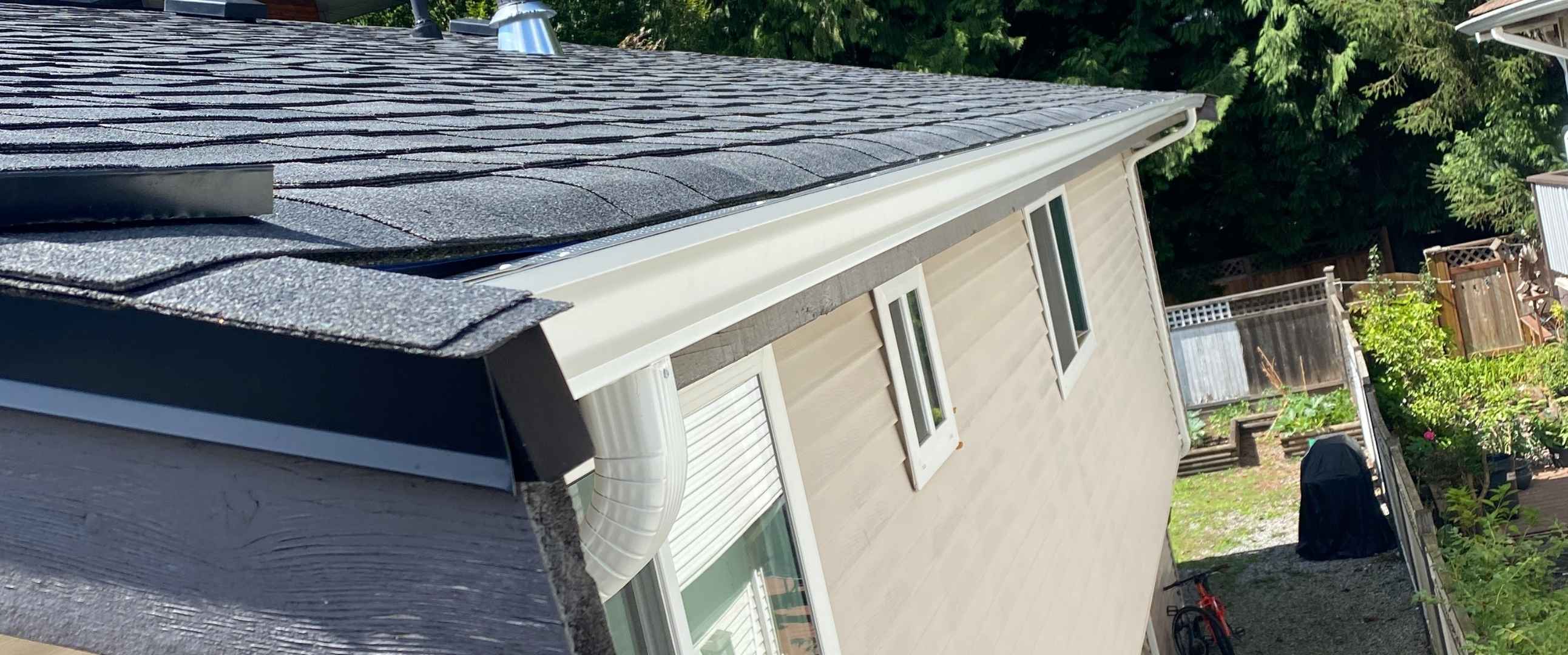
Ask the estimate to identify the affected runs, downspouts, access requirements, disposal and any work to the supporting fascia. Clarify what is excluded, especially underground drainage. Our North Vancouver gutter replacement project shows an example of completed gutter and downspout work; the featured photo is from that project.
Common questions
Will gutter guards stop overflow?
Guards can help limit debris, but they do not resolve every drainage problem. InterNACHI notes that covered gutters still need maintenance. Have the cause assessed before treating guards as the solution.
What should I send with an estimate request?
Include your property address, a description of where water escapes, when the gutters were last cleaned, and any safely taken photos or video. Mention whether the downspouts discharge visibly or connect underground.
Get help with overflowing gutters
Level Up Canadian Roofing & Exteriors offers gutter and downspout repairs and replacement in Richmond and the Lower Mainland. Request a free estimate or call 604-239-5656 to discuss your property and the next steps.

