Water Sitting on Your Flat Roof? What to Check After Rain
Water staying on your flat roof after rain? Learn what to record, what a drainage assessment should cover, and how to compare repair options.
A puddle on a flat roof can raise two very different questions: is the roof leaking, and is it draining properly? They deserve separate answers. Water remaining after rain does not, by itself, prove that the whole roof needs replacement. It does mean the drainage pattern is worth understanding.
For homeowners in Richmond and the Lower Mainland, the most useful first step is to record what happens between rainfalls and arrange an assessment of the roof and its outlets together. This guide covers conventional low-slope roofs, such as those over additions and garages, rather than roofs specifically designed to retain rainwater.
How long has the water been there?
The Canadian Roofing Contractors Association’s reference manual uses water remaining 48 hours after rainfall as a rule-of-thumb concern under normal weather conditions. It distinguishes persistent ponding from small, shallow surface depressions sometimes called bird baths.
That is a useful observation window, not a promise that every puddle is harmless until the clock runs out. Repeated rain can make the timing difficult to judge. Tell the contractor when rain stopped, whether it restarted, and whether the wet area is shrinking. Report active indoor leakage or visible sagging promptly rather than waiting two days.
Take photographs only from a safe, accessible position, such as an indoor window. Do not climb onto a wet roof to measure a puddle, clear an outlet or test the surface underfoot.
Give the assessor a useful record
A single photograph shows a moment. A short sequence can make the discussion much more specific. If you can observe the roof safely, record:
- The date and approximate time of each photograph.
- Whether water collects in the same place after each rainfall.
- Whether the wet area is beside a wall, skylight, drain or roof edge.
- Any recent roofing work, drain cleaning or equipment installation.
- Interior stains or drips, including when you first noticed them.
Keep previous estimates and repair invoices available. Ask the assessor to distinguish what the photographs establish from what still needs an on-site check. You should not have to diagnose the cause before requesting help.
Check the drainage route before choosing a repair
The CRCA notes that blocked drains or scuppers can cause ponding even on an adequately sloped roof. A scupper is an outlet through a roof-edge wall. An assessment should therefore consider where the water is intended to leave, not just where it collects.
Ask whether the outlet is obstructed and whether the proposed investigation includes the connected drainage route. If the problem extends into piping, clarify whether a drainage specialist is needed. A roofing estimate should explain the boundary of the work instead of leaving you to assume that every downstream blockage is included.
Cleaning and roof alterations are different scopes. If clearing debris is recommended first, ask how the result will be checked after rainfall and what happens if the same wet area returns.
Why repeated ponding deserves attention
The Asphalt Roofing Manufacturers Association identifies added loading, debris accumulation, vegetation growth and membrane deterioration among the possible consequences of persistent ponding. Its guidance also describes drainage improvements involving slope, outlet placement and, where appropriate, tapered insulation.
Those are design choices for a qualified assessment, not a shopping list of upgrades every roof needs. Ask the contractor to identify the specific cause they are addressing. If a proposal includes changing the roof’s slope or adding an outlet, request an explanation of how the proposed layout will move water off your particular roof.
A surface patch and a drainage correction also answer different questions. Have the estimate state whether it repairs a waterproofing defect, improves drainage, or does both. That distinction helps you understand what improvement to expect.
What a useful written estimate should explain
Before comparing prices, look for a clear description of the inspected area and the findings. Then ask for these details:
- Which drains, seams, flashings or roof sections are included.
- What will remain in place and what will be removed.
- Whether further investigation is needed before a firm scope can be offered.
- How concealed damage and additional costs will be documented for your approval.
- Whether plumbing, interior finishing or structural assessment is excluded.
- How completion will be documented and whether a follow-up check is included.
If replacement is recommended, ask why a more limited repair would not address the findings. Conversely, ask what remains unresolved if the proposal offers only a temporary measure. A clear limitation is more useful than a vague assurance that the roof has been “sealed.”
Common questions
Does a dry ceiling mean the roof is fine?
It is helpful information, but it does not establish that drainage is working properly. Report the standing water even if you have not seen an interior leak.
How often should a flat roof be checked?
SOPREMA’s preventive maintenance guidance recommends inspections at least twice yearly, ideally in fall and at the end of winter, and after major weather events. Ask for a maintenance plan appropriate to your roof system and any applicable warranty requirements.
Get a clear plan for your roof
Concerned about recurring standing water? Explore our roof repair and replacement services, then request a free estimate from Level Up Canadian Roofing & Exteriors. Include your property address, photographs taken safely and the rainfall timing. You can also call 604-239-5656.
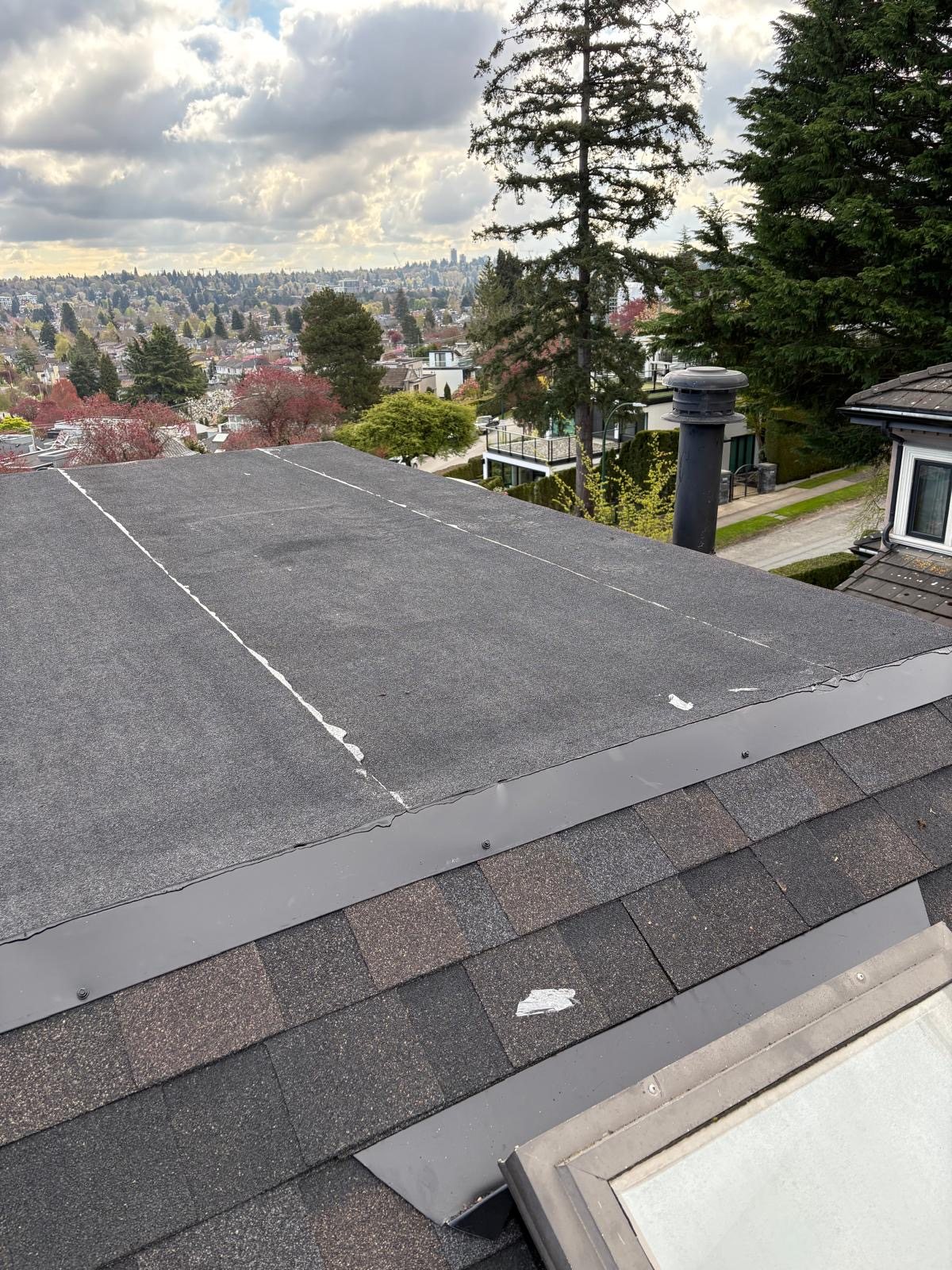
Featured photo: a finished flat roof section and metal edge flashing from our Vancouver roof and gutter replacement project. This illustrates the roof type; it is not a photograph of a ponding problem.